This is a tool to use for anybody who has to learn for school purposes and also to share interests like football and the best team in the world: OSASUNA from Pamplona, Spain.
Welcome
Check every section from this blog and take your time to use the commentaries to help to improve it. Thank you!
Irish celebrate Saint Patrick´s Day on 17th March every years. It´s a commemoration the arrival of the Catholic religion to Ireland and Saint Patrick´s dead. Ireland and New York have the most important celebration.
* IRELAND:
It lasts 4 days. There are many parades and lots of events in all the city. Typically , Irish eat cournbeef, although it is cuaresma and they shouldn´t eat meat. Beer is another important thing in this celebration and don´t miss in any house. Also all the people dresses with green clothes and the three leaf cover (it´s a symbol of good luck)
* NEY YORK:
It celebrates Saint Patrick´s Day to remember his Irish forefathers. There is a
huge parade in The Big Apple with beautiful floats and dancers. The
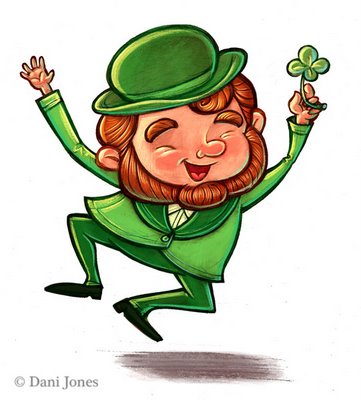
leprechaun is another important character. This strange creature is small and
it usually have a green hat and a green coat too. Legends say that it has a lot
money and gold.
This celebration is so important for the citizens, that they dye Chicago
river green. It is a important tourist attraction.
All the world celebrate Saint Patrick, with different manners and I really like it.
The St. Patrick's
Day is celebrated annually on March 17 to commemorate the death of Saint
Patrick, It´s a national fest in Ireland where everything is green and Irish;
Christians and no Christians celebrate the feast, regularly dressing of green,
and they enjoy Irish cuisine which includes alcohol and Irish drinks, and
attending parades. Some markets selling beer dyed green for the feast.
Why St. Patrick
is celebrated ?
Irish pirates took prisoner
the young Patrick 16 and sold him as a slave. He stayed there six years in
Ireland, where he learned to speak the Celtic language. He managed to escape and
went to France to prepare for the monastic life, and became a priest.
A Christian tradition
says Patrick explained the mystery of the Holy Trinity using a three leaf
clover. since that day as usual have to wear a clover on his feast and dress in green and even dyed with this color beer
in honor of Ireland, also nicknamed the "Emerald Island."
Opinion
In my opinion this celebrate it´s
very curious because I never heard that the people dressed up of green even I
felt curiosity for the green beer, finally I think that is a amazing
celebration
Saint Patrick´s day is celebrated in Ireland and it is on 17th of March. It symbolizeS Saint Patrick´s death.
In this festival all the people are dress with green clothes, because the green colour is a lucky thing.
Another lucky things are the Spring, shamrocks and Chicago river, because all this things are green.
If you aren´t dress of green in that day, the people can pinch you. It is a american tradition. They think that the green colour could make you invisible to avoid pinches. In the beginning of the St Patrick´s day, the people dressed of blue.
There are a lot of traditions in St Patrick´s day. For example the Irish people eat meat with sprouts.
Also, if you see a Leprechaun you should have catch him because it has a pot full of money and gold.
Another Irish food are potatoes, fish, broccoli and carrots.
Saint Patrick´s legend tells that he throw out a lot of snakes of there. And the people make some jokes related with this success.
One traditional drink are the beer. Without drinking Black Irish beer the celebration isn´t the same.
In Spain, Saint Patrick´s day is celebrated too. It is join in Galicia, in a village of Pontevedra. This party is join there because this city has association with the Irish tradition. And more or less 4.000 people join it.
The whole of southern England faces a further flooding threat with more rain, strong winds and large waves on the way.
The risk of flooding in already swamped parts of the UK is set to increase over the next few days, although most places are today seeing some respite from continual rain.
The Environment Agency (EA) said: "The whole of the south of England is at an increased risk of flooding on Monday and Wednesday, as high tides as and large waves threaten the south coast, while further rain from Tuesday on already saturated ground could lead to river flooding."
The EA warned of coastal flooding affecting the south coasts of Devon and Cornwall tomorrow as well as Somerset, Dorset, Hampshire and the Isle of Wight.
It added: "Strong winds and high waves could cause flooding along the whole of the south coast on Tuesday and into Wednesday."
The coast of Wales and southwest England, including the coasts and tidal areas of Dorset, Somerset and Bristol were also on high alert.
Elsewhere, residents in the Somerset Levels were preparing for a sixth successive week of flooding.
Road access to the village from the neighbouring Moorlands has been shut off, with several large-scale pumps being used to direct the water out into the bursting River Parrett.
Huge sandbags have been placed by the waters edge, along with several signs erected by residents urging the authorities to "dredge the river".
"Everything possible is being done over the weekend to help those affected by flooding and to prepare for the further bad weather and high tides forecast overnight and into next week," he said.
On Saturday in the Republic of Ireland dozens of people were rescued and the army was drafted in to deal with "unprecedented" flooding in Limerick City after the river Shannon burst its banks.
It’s been 100 years since the “unsinkable” HMS Titanic – considered the most luxurious ocean liner ever built – hit an iceberg on 14 April 1912 and sank in just two hours and 40 minutes, causing the deaths of 1,514 passengers.
A human disaster that caused worldwide shock and horror. It is also a story that remains strongly linked to the history of love thanks to James Cameron's film.
The Titanic will long be remembered as one of the biggest losses alongside other major natural and manmade catastrophes such as the 1906 San Francisco Earthquake and more recently 9/11 ( 11th September 2001 ), Hurricane Katrina and last year’s Tohoku earthquake and tsunami.
At the time of the disaster, the market – and media – was in the early stages of using wireless telegraphy to communicate with ships at sea. With the help of inventor Marconi set up signal stations from Cornwall to Canada allowing ships crossing the Atlantic to communicate with land.
The signal station in Halifax, Nova Scotia was called Cape Race. It was first to hear the news that the ship was sinking. However, other stations subsequently issued conflicting reports and this resulted in plenty of confusing information in the days following.
Even up to two days later some newspapers were still reporting that Titanic had not sunk and was instead being towed to Halifax or even continuing under its own steam.
Considered a prestigious risk to insure, cover for the hull alone was £1million – around £95million in today’s money. Titanic, the ship built for millionaires, was a significant insurance loss from a marine cargo.
St. Patrick's Day is a day that commemorates the death of this saint. It is celebrated on March 17 and is more popular in Ireland and some parts of America. St. Patrick is famous for eliminating reilgiones pagan Ireland and bring Christianity to the island. Also, according to legend, drove snakes. In this party primary color is green, lots of people dress in clothes of this color. It is a feast day in Ireland, only open the bars and other establishments. The passion is so great that even in places drink green beer and paint the rivers.
The Day of Saint Patrick is celebrated anually on March 17 by his death, Holy patron of Ireland. It is a national holiday in the Republic of Ireland.
The Day of San Patricio is probably the calendar most celebrated in the world. The Day of San Patricio is celebrated worldwide by all the Irish and even by people who is not Irish.
The celebration generally takes everything as a subject matter what is green and Irish; Christians, and not Christians, celebrate the holiday regularly dressing of green, enjoying the Irish gastronomy which includes cabbage and Irish drinks, and being present at parades. In some establishments beer is sold dyed of green for the festivity.
Saint Patrick, who lived during the fifth century, is the patron saint and national apostle of Ireland. Born in Roman Britain, he was kidnapped and brought to Ireland as a slave at the age of 16. He later escaped, but returned to Ireland and was credited with bringing Christianity to its people. In the centuries following Patrick's death (believed to have been on March 17, 461), the mythology surrounding his life became ever more ingrained in the Irish culture: He is most known for driving snekes to Ireland. It is true there no snakes in England- Never have been.
St. Patrick's Day is celebrated on March 17. On St. Patrick's Day, which falls during the Christian season of Lent, Irish families would traditionally attend church in the morning and celebrate in the afternoon. Lenten prohibitions against the consumption of meat were waived and people would dance, drink and feast--on the traditional meal of Irish bacon and cabbage.
Today, people of all backgrounds celebrate St. Patrick's Day, especially throughout the United States, Canada and Australia. Although North America is home to the largest productions, St. Patrick's Day is celebrated in many other locations far from Ireland, including Japan, Singapore and Russia.
According to Encyclopedia Britannica, St. Patrick was the patron saint and national apostle of Ireland who is credited whith bringing christianity to Ireland.
Saint Patrick is most known for driving the snakes from Ireland. It is true there are no snakes in Ireland, but there probably never have been. As in many old pagan religions serpent symbols were common and often worshipped.
St Patrick's Day is a traditional day for spiritual renewal, the Irish are descendants of the ancient Celts, but the Vikings, Normans and English contributed to the ethnic nature of the people.
in American cities with a large Irish population, St. Patrick´s Day is a very big deal. They celebrate whith parades,``wearing of the green´´, music and songs, Irish food and drink, and activities. Some communities even go so far as to dye rivers or streams green!
He is most known for driving the snakes from Ireland. It is true there aro no snakes in Ireland, but never have been. As in many old pagan religions, serpent symbols were common and often worshipped.
Saint Patrick´s day has been associated with everything Irish: green and gold, shamrocks, luck... Saint Patrick´s day is a traditional day for spitirual renewal.
The Irish are descendants of the ancient Celts, but the Vikings, Normans and English contributed to the ethnic nature of the people. English rule eliminated the use of the ancient Gaelic, or Irish, language.
Saint Patrick is celebrated on 17th of Martch because is the day that he died: that is the theory.
With the exception of restaurants and pubs, almost all businesses close on March 17th.
In American cities with large Irish population, Saint Patrick´s day is a very big deal, celebrated with parades "wearing of the green", music and songs, Irish food and drink, activities for kids such as crafts, coloring and games.
Some comunities even go so far as to dye rivers or streams green!!
THIS ARTICLE WAS WRITEN BY ME THREE YEARS AGO, BUT I THINK IT'S A GOOD TIME TO HAVE A LOOK AGAIN! HAPPY SAINT PATRICK'S DAY 2012 TO EVERYONE!
SAINT PATRICK'S day is a public and religious national holiday throughout Ireland. It is a moment for religious ceremonies, going to mass or other denominational church services, wearing of shamrock, watching school rugby and Gaelic football matches and attending low key cultural parades in towns. Even the large parade in Dublin is a small affair; most prominent public representatives and politicians, including the Irish Taoiseach are in Washington to attend the American President's celebration. There are pilgrimages made to Armagh, Saul, DownPatrick and Slemish which are all places associated with the Saint. The major celebrations are held in American cities and are closely linked to the nineteenth century Irish peasantry observances of Saint Patrick's Day. Between 1801 and 1921, more than eight million people emigrated from Ireland. Most of the emigrants settled in USA, in the cities of Boston, New York, Chicago and Philadelphia. These nineteenth century emigrants were not the first Irish people to settle in USA. During the early eighteenth century, prosperous Ulster Protestants emigrated. Given that Saint Patrick is very closely associated with Irish Catholic America today, the fist recorded festivities and Friendly societies associated with Saint Patrick in America were founded by Protestants. In most cases, Catholics were specifically banned from participation. The first documented meeting of Irishmen in America to honour Saint Patrick occurred in Boston on 17 March 1737. The Charitable Irish Society stipulated that its members lived in Boston and were Irish Protestants. By 1742, wealthy Catholic members had joined the Society.
New York was the venue for the first Saint Patrick's Day parade. In 1762, a group of Irish militia men were on their way to a Saint Patrick's Day tavern breakfast when they decided to march behind their band and display their regimental banners. The spectacle delighted participants and onlookers. So marching on 17 March to the sound of Irish tunes became an American way of life. During the American War of Independence, military celebrations continued on 17 March. On 17 March 1776 the British evacuated the city of Boston and George Washington led the American rebels into the city to take possession. In 1778, Saint Patrick's Day was celebrated by Washington's army at Valley Forge. It was not until the 1830s that the rural Catholic Irish arrived began to arrive in American cities. During the Irish Famine, people emigrated for survival. The longing for home turned into homesickness, which was sentimentalised in songs. Saint Patrick's Day provided the perfect occasion for the Irish to lament together their native homeland. It was an occasion to join together in celebrating their nationality. The military example had displayed the effectiveness of marching behind a band that was playing Irish airs which was enjoyed by spectators and marchers. Parading in green along the street and playing uplifting, rousing melodic music ensured an enjoyable occasion of patriotic self indulgence. By the 1900s, second and third generation Irish Americans were established as an influential and powerful section of American society. The Saint Patrick's Day parade provided an opportunity for the community to celebrate not only its ethnic origin but also its successful integration into American society. Today Saint Patrick's Day is celebrated throughout the world. There are parades in cities across Canada, Australia, Africa, Southern America and in many European capitals. The parades are secular, communal celebrations where the Saint and his life are forgotten.
St. Patrick's day is celebrated annually on March 17 to commemorate the death of St. Patrick.Se celebrated for five days, the largest parade is held is in New York.Big cities and small towns alike celebrate with parades,wearing of the green,music and songs,Irish food and drink,and activiities for kids. Saint Patrick's day has come to be associated with everything irish anything green and gold shamrocks and luck. St. Patrick's day is a traditional day for spiritual renewal.
If you take a look at your calendar you'll notice that the days of February run to 29 this year. That's because of course 2012 is a leap year and according to Irish tradition February 29th is the day when women may propose to men.
This is known as ‘Ladies Privilege' and the tradition in Ireland has its origins in the legends of Ireland's Saints; St Bridget and St Patrick, after Bridget urged Patrick to allow women the right to propose. Patrick refused but later agreed to allow Ladies Privilege once every seven years, Bridget bartered him down to four and the tradition was established.
Here it is the story!
In the 5th century St Bridget from Ireland complained to St Patrick about women having to wait for the men to propose. So according to legend St Patrick replied that on the 29th February women can propose to the man of her choice.
The right for women to propose on this date goes back many hundreds of years to when the leap year day had no recognition in English law so had no legal status. People assumed that tradition would also have no status on that day. It was also reasoned that the leap year was to fix a problem with the calendar so could be used to fix an old and unjust custom that only let men propose marriage. Bear in mind that Ireland is an ultra catholic country, and so it was in 5th century!!
If your planning on popping the question or taking a romantic vacation in Ireland, what better place to start than Dublin. Ireland's capital city has charm, character and romantic landmarks such as Ha'penny Bridge, Croke Park and the burial place of St Valentine. It is a little known Dublin fact that in 1836, the relics of St Valentine were brought to Dublin and are kept in the Shrine of St Valentine at the Whitefriar Street Carmelite Church, a short walk from St Stephen's Green. What better place to be this St Valentine's Day?
So ladies, if you're tired of waiting to here the question, why not pop it yourself and take advantage of ladies privilege this year with a trip to some of the romantic places in Ireland? And gentlemen - remember if you were to get hitched on February 29th you only have to remember your anniversary once every four years!
The Giant's Causeway (Irish: Clochán an Aifir or Clochán na bhFómharach) is an area of about 40,000 interlocking basalt columns, the result of an ancient volcanic eruption. It is located in County Antrim on the northeast coast of Northern Ireland, about two miles (3 km) north of the town of Bushmills. It was declared a World Heritage Site by UNESCO in 1986, and a National Nature Reserve in 1987 by the Department of the Environment for Northern Ireland. In a 2005 poll of Radio Times readers, the Giant's Causeway was named as the fourth greatest natural wonder in the United Kingdom[2]. The tops of the columns form stepping stones that lead from the cliff foot and disappear under the sea. Most of the columns are hexagonal, although there are also some with four, five, seven and eight sides. The tallest are about 12 metres (36 ft) high, and the solidified lava in the cliffs is 28 metres thick in places.
The Giant's Causeway is today owned and managed by the National Trust and it is the most popular tourist attraction in Northern Ireland.
History Some 50 to 60 million years ago,during the Paleogene period, Antrim was subject to intense volcanic activity, when highly fluid molten basalt intruded through chalk beds to form an extensive lava plateau. As the lava cooled rapidly, contraction occurred. While contraction in the vertical direction reduced the flow thickness (without fracturing), horizontal contraction could only be accommodated by cracking throughout the flow. The size of the columns is primarily determined by the speed at which lava from a volcanic eruption cools. The extensive fracture network produced the distinctive columns seen today. The basalts were originally part of a great volcanic plateau called the Thulean Plateau which formed during the Paleogene period.
Legend
Engraving of Susanna Drury's A View of the Giant's Causeway: East ProspectLegend has it that the Irish warrior Fionn mac Cumhaill (Finn McCool) built the causeway to walk to Scotland to fight his Scottish counterpart Benandonner. One version of the legend tells that Fionn fell asleep before he got to Scotland. When he did not arrive, the much larger Benandonner crossed the bridge looking for him. To protect Fionn, his wife Oonagh laid a blanket over him so he could pretend that he was actually their baby son. In a variation, Fionn fled after seeing Benandonner's great bulk, and asked his wife to disguise him as the baby. In both versions, when Benandonner saw the size of the 'infant', he assumed the alleged father, Fionn, must be gigantic indeed. Therefore, Benandonner fled home in terror, ripping up the Causeway in case he was followed by Fionn.
Another variation is that Oonagh painted a rock shaped like a steak and gave it to Benandonner, whilst giving the baby (Fionn) a normal steak. When Benandonner saw that the baby was able to eat it so easily, he ran away, tearing up the causeway.
Another version of the legend was that Fionn had spent many days and nights trying to create a bridge to Scotland because he was challenged by another giant. A fellow boatsman told him that the opponent was much larger than he. Fionn told his wife and she came up with an ingenious plan to dress Fionn like a baby. They spent many nights creating a costume and bed. When the opponent came to Fionn's house; Fionn's wife told him that Fionn was out woodcutting and the opponent would have to wait for him to return. Then Fionn's wife showed him her baby and when the opponent saw him he was terrified at the thought of how huge Fionn would be. He ran back to Scotland and threw random stones from the causeway into the waters below.
The "causeway" legend corresponds with geological history in as much as there are similar basalt formations (a part of the same ancient lava flow) at the site of Fingal's Cave on the isle of Staffa in Scotland.
Tourism The discovery of the Giant's Causeway was announced to the wider world in 1693 by the presentation of a paper to the Royal Society from Sir Richard Bulkeley, a fellow of Trinity College. In the caption to the plates French geologist Nicolas Desmarest suggested, for the first time in print, that such structures were volcanic in origin.
The site first became popular with tourists during the nineteenth century, particularly after the opening of the Giant's Causeway Tramway, and only after the National Trust took over its care in the 1960s were some of the vestiges of commercialism removed. Visitors can walk over the basalt columns which are at the edge of the sea, a half mile walk from the entrance to the site.
Similar structures Although the basaltic columns of the Giant's Causeway are impressive, they are not unique. Basalt columns are a common volcanic feature, and they occur on many scales (because faster cooling produces smaller columns). Similar sites include: the flood basalts of the Columbia Plateau of eastern Washington state, the Prismas Basálticos in Hidalgo, Mexico, the Los Tercios waterfall in Suchitoto, El Salvador, Fingal's Cave and the 'Kilt Rock' on Skye in Scotland, east coast of Suðuroy, the Faroes, Svartifoss in Iceland, Jusangjeolli in South Korea, the Garni gorge in Armenia, the Cyclopean Isles near Sicily, Devils Postpile National Monument in California, Devils Tower National Monument in Wyoming, the Organ Pipes National Park just outside of Melbourne, Australia, the "Organ Pipes" formation on Mount Cargill in New Zealand, the "Rocha dos Bordões" formation in Flores, the Azores, near Twyfelfontein in Namibia, Gành Đá Đĩa in Vietnam, Cape Stolbchatiy in Russia, Coloanele de bazalt in Racoş, Romania, Fingal Head in New South Wales, Australia, the Hong Kong National Geopark in High Island Reservoir in Hong Kong, China, and on St. Mary's Islands on the west coast of India and in Riyom, Nigeria.
These days it is celebrated Arthur's Day in Dublin and other cities worldwide. It started last year, when it was celebrated the 250th anniversary of the Guinness brewing company.
The events take place in the city of Dublin, mainly, but also in Kuala Lumpur or New York. Everything starts at 17.59 as it is believed that the company started in the year 1759 on a day like today. It was the result of Guinness's father's will, 100 pounds of that time, and the investment was very successful and became famous.
So enjoy this day and drink a good Guinness. A toss for Arthur Guinness on Thursday 23rd, no matter where you are, find an Irish pub and celebrate!
SAINT PATRICK'S day is a public and religious national holiday throughout Ireland. It is a moment for religious ceremonies, going to mass or other denominational church services, wearing of shamrock, watching school rugby and Gaelic football matches and attending low key cultural parades in towns. Even the large parade in Dublin is a small affair; most prominent public representatives and politicians, including the Irish Taoiseach are in Washington to attend the American President's celebration. There are pilgrimages made to Armagh, Saul, DownPatrick and Slemish which are all places associated with the Saint. The major celebrations are held in American cities and are closely linked to the nineteenth century Irish peasantry observances of Saint Patrick's Day. Between 1801 and 1921, more than eight million people emigrated from Ireland. Most of the emigrants settled in USA, in the cities of Boston, New York, Chicago and Philadelphia. These nineteenth century emigrants were not the first Irish people to settle in USA. During the early eighteenth century, prosperous Ulster Protestants emigrated. Given that Saint Patrick is very closely associated with Irish Catholic America today, the fist recorded festivities and Friendly societies associated with Saint Patrick in America were founded by Protestants. In most cases, Catholics were specifically banned from participation. The first documented meeting of Irishmen in America to honour Saint Patrick occurred in Boston on 17 March 1737. The Charitable Irish Society stipulated that its members lived in Boston and were Irish Protestants. By 1742, wealthy Catholic members had joined the Society.
New York was the venue for the first Saint Patrick's Day parade. In 1762, a group of Irish militia men were on their way to a Saint Patrick's Day tavern breakfast when they decided to march behind their band and display their regimental banners. The spectacle delighted participants and onlookers. So marching on 17 March to the sound of Irish tunes became an American way of life. During the American War of Independence, military celebrations continued on 17 March. On 17 March 1776 the British evacuated the city of Boston and George Washington led the American rebels into the city to take possession. In 1778, Saint Patrick's Day was celebrated by Washington's army at Valley Forge. It was not until the 1830s that the rural Catholic Irish arrived began to arrive in American cities. During the Irish Famine, people emigrated for survival. The longing for home turned into homesickness, which was sentimentalised in songs. Saint Patrick's Day provided the perfect occasion for the Irish to lament together their native homeland. It was an occasion to join together in celebrating their nationality. The military example had displayed the effectiveness of marching behind a band that was playing Irish airs which was enjoyed by spectators and marchers. Parading in green along the street and playing uplifting, rousing melodic music ensured an enjoyable occasion of patriotic self indulgence. By the 1900s, second and third generation Irish Americans were established as an influential and powerful section of American society. The Saint Patrick's Day parade provided an opportunity for the community to celebrate not only its ethnic origin but also its successful integration into American society. Today Saint Patrick's Day is celebrated throughout the world. There are parades in cities across Canada, Australia, Africa, Southern America and in many European capitals. The parades are secular, communal celebrations where the Saint and his life are forgotten.
ON OUR LIPS OR ON OUR NECK, IN THE RAIN OR ON THE BEACH,WITH STRAWBERRY FLAVOUR OR CHAMPAGNE AND WITH ROMANTIC MUSIC AT THE BACK. THESE ARE THE MOST DESIRED KISSES BY SPANISH COUPLES .
Spanish couples prefer kisses on our lips, on our neck, with strawberry flavour and if possible in the rain or on the beach, according to a survey made on Saint Valentin Day, a date that thousand couples will celebrate with romantic dinners and gifts.
The survey, made by the publisher of Romantic novels Harlequin Iberica, interviewed 4,000 people in 18 countries, and it also says that more than half Spanish men are satisfied with their way of kissing; one of the highest percentage of the survey.
The self-content in this field is, however, overcome by Italians ( 72% are happy with their way of kissing ), Norwegians ( 68% ) and Mexicans ( 57% ).
The survey reflects something else than our preferences about kisses. It also talks about the war of sex, the differences between men and women in most countries. In that way, men prefer natural lips, especially the sensual and a bit thick, and women like strong and thin ones. Besides in the mouth, the key answer for the question “Where do you prefer to be kissed on?”is our neck, with an average of 44.8% in the survey, though that percentage goes up to 48% among women ( 27% among men ) in Spain. In the rest, it’s shocking those 29% of Finnish people who answered they like to be kissed on their navel.
When they were questioned for the taste of the kisses, the likes seem to match with some boleros or other romantic sounds and so strawberry, champagne and mint are the most preferred flavours in most of the countries.